Shipbuilding Steel Grade E
Shipbuilding steel Grade E is a high-strength marine steel designed to operate in extreme conditions of low temperatures and high mechanical loads. Due to its high impact toughness, corrosion resistance, and strength, this alloy is widely used in shipbuilding for manufacturing hulls of vessels, icebreakers, and other marine structures.
General Technical Characteristics
| Parameter | Value |
|---|---|
| Steel Grade | Grade E |
| Steel Type | High-strength shipbuilding steel |
| Density | ~7.85 g/cm³ |
| Operating Temperature | Up to -40°C |
| Yield Strength | ≥ 235 MPa |
| Tensile Strength | 400-520 MPa |
| Impact Toughness | ≥ 27 J at -40°C |
| Elongation | ≥ 22% |
Applications of Steel Grade E
🔹 Ship hulls – used for constructing cargo ships, oil tankers, and container ships.
🔹 Icebreakers – applied in structures operating under Arctic temperatures.
🔹 Offshore platforms – used as the foundation for drilling platforms and marine structures.
🔹 Ship structures – bulkheads, decks, beams, and other load-bearing elements.
🔹 Naval vessels – employed in the construction of warships and submarines.
Key Features of Steel Grade E
✅ High impact toughness – maintains strength characteristics at low temperatures.
✅ Corrosion resistance – withstands exposure to seawater and atmospheric conditions.
✅ Excellent weldability – easily welded without losing mechanical properties.
✅ Mechanical strength – endures significant dynamic and static loads.
✅ Durability – extends the lifespan of ship structures.
Chemical Composition of Steel Grade E
| Element | Content (%) |
|---|---|
| Carbon (C) | ≤ 0.18 |
| Manganese (Mn) | 0.90-1.60 |
| Silicon (Si) | ≤ 0.50 |
| Phosphorus (P) | ≤ 0.025 |
| Sulfur (S) | ≤ 0.025 |
| Nickel (Ni) | ≤ 0.40 |
| Chromium (Cr) | ≤ 0.20 |
| Molybdenum (Mo) | ≤ 0.08 |
| Copper (Cu) | ≤ 0.35 |
Mechanical Properties of Steel Grade E
| Property | Value |
|---|---|
| Yield Strength | ≥ 235 MPa |
| Tensile Strength | 400-520 MPa |
| Elongation | ≥ 22% |
| Impact Toughness | ≥ 27 J at -40°C |
Advantages of Shipbuilding Steel Grade E
✔ Excellent strength and stability – suitable for extreme conditions.
✔ High corrosion resistance – protects structures from seawater damage.
✔ Good machinability – easily welded and processed mechanically.
✔ Reduced operational costs – increased durability of ship structures.
✔ Wide range of applications – used in shipbuilding, offshore industries, and naval fleets.
🔹 Conclusion:
Shipbuilding steel Grade E is an ideal material for constructing ships, offshore platforms, and icebreakers where high strength, low-temperature resistance, and durability are required. Thanks to its unique properties, it is widely used in the shipbuilding and oil & gas industries.
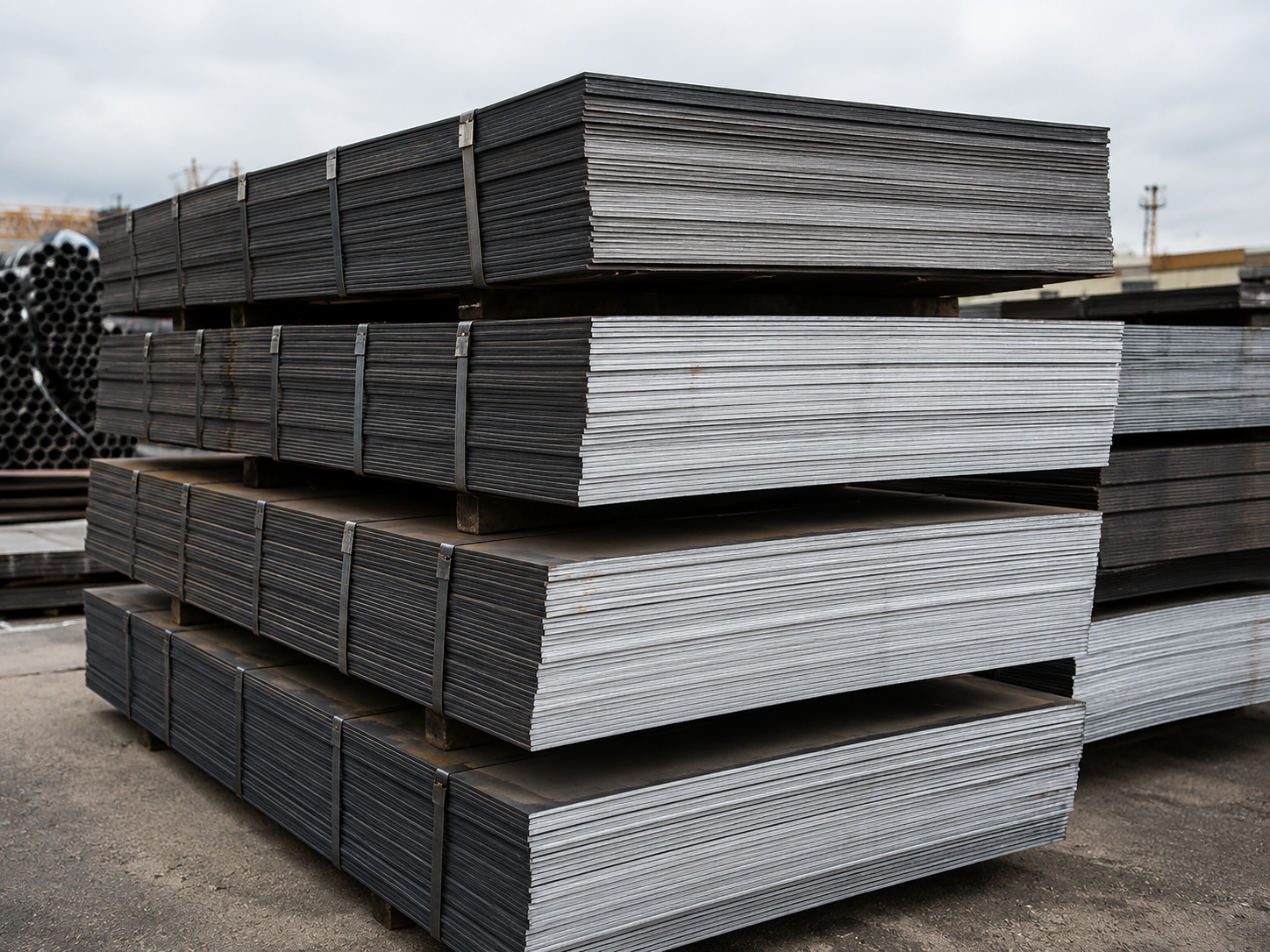
Forms of Supply for Shipbuilding Steel Sheets
| Shipbuilding Steel
| |||
| Marking
| Dimensions, mm | ||
| Thickness
| Width
| Length up to
| |
| Grade А
| 3 — 100
| 1 000 — 3 500
| 16 000
|
| Grade D
| 4 — 120
| 1 000 – 4 000
| 16 000
|
| Grade E
| 4 — 120
| 1 000 — 4 000
| 16 000
|
| D36
| 4 — 60
| 1 000 — 4 000
| 16 000
|
| E 36 / EH 36
| 5 — 250
| 1 000 — 3 500
| 16 000
|
| F 36 / FH 36
| 6 — 100
| 1 000 — 3 500
| 16 000
|
| EH 40
| 8 — 40
| 1 000 — 3 500
| 16 000
|