• Mon - Sat : 9:00 - 18:00
  • Sun : day off

Nickel Alloy DD405 / DD419

Nickel Alloy DD405 / DD419

Quantity

The goods can be picked up by self-delivery at metal depots in Kyiv. Also, in agreement with the customer, rolled metal products can be delivered to any region of Ukraine

  • Characteristics

Nickel Alloy DD405 / DD419

DD405 and DD419 are second-generation single-crystal heat-resistant nickel-base superalloys (standardized under the GB/T 14992 system), engineered for manufacturing the most thermally and mechanically stressed hot-section components in modern aircraft and power-generation gas turbine engines.
Both alloys are fortified with rhenium (Re — approx. 3%), tantalum, and tungsten with minimal grain-boundary impurities, enabling the casting of components with a unified single-crystal structure and allowing high-temperature solution heat treatment. In terms of chemical composition and performance class, DD405 (formerly designated as DD5) serves as the functional counterpart to the single-crystal superalloy René N5 (incorporating rare-earth micro-alloying to enhance oxidation resistance), whereas DD419 aligns in alloying system with CMSX-4. The primary strengthening mechanism is the precipitation of a high volume fraction of the intermetallic $\gamma’$-phase (approx. 68–70%), coupled with solid-solution matrix strengthening from rhenium, tungsten, and tantalum.
DD405 and DD419 are primarily used for vacuum precision investment casting of single-crystal internally cooled high-pressure turbine (HPT) rotor blades and nozzle guide vanes in latest-generation gas turbine engines.

General Technical Characteristics

  • Material Type: Second-generation single-crystal (SX) heat-resistant nickel-base superalloy.

  • Grade: DD405 / DD419.

  • Designation: DD405 (former designation DD5, ISC C84057), DD419; functional class equivalents — René N5 (for DD405) and CMSX-4 (for DD419).

  • Standards / Specifications: GB/T 14992, HB (aerospace industry specifications).

  • Alloy Base: Nickel (Ni).

  • Alloying System: Ni-Co-Cr-Ta-W-Al-Re-Mo-Hf (DD419 also includes Ti; DD405 features Y/La micro-additions).

  • Primary Manufacturing Method: Vacuum Induction Melting (VIM) followed by precision vacuum single-crystal investment casting.

  • Strengthening Mechanism: Precipitation hardening (approx. 68–70% $\gamma’$-phase) and solid-solution strengthening with rhenium, tungsten, and tantalum.

  • Key Properties: Ultimate creep-rupture strength (up to 1100–1130 °C), complete elimination of grain boundaries, and outstanding creep and thermal fatigue resistance.

  • Supply Forms: High-purity cast remelt bars and ingots (master alloy), single-crystal castings, and blanks.

Chemical Composition

Typical chemical composition of DD405 and DD419 according to industry standards and technical specifications, wt. %:
ElementDD405 (DD5), %DD419, %
Nickel (Ni)BalanceBalance
Cobalt (Co)7.00 – 8.009.20 – 10.00
Chromium (Cr)6.70 – 7.306.20 – 6.60
Tantalum (Ta)6.20 – 6.806.30 – 6.70
Tungsten (W)4.70 – 5.306.20 – 6.60
Aluminum (Al)5.90 – 6.405.45 – 5.75
Rhenium (Re)2.80 – 3.202.80 – 3.10
Titanium (Ti)max 0.050.90 – 1.10
Molybdenum (Mo)1.30 – 1.700.50 – 0.70
Hafnium (Hf)0.12 – 0.200.07 – 0.15
Carbon (C)0.04 – 0.06max 0.01
Rare Earths (Y / La)0.005 – 0.020 (micro-additions)—
Iron (Fe) / Silicon (Si)max 0.20 / max 0.20max 0.20 / max 0.05
The values provided are for reference purposes. Actual chemical composition must be verified against the applicable standard revision (GB/T 14992 / HB) and the specific heat/melt certificate.

Mechanical and Performance Properties

DD405 and DD419 retain record stress-rupture strength and creep resistance at extreme temperatures up to 1100–1130 °C (2010–2065 °F), delivering a 25–30 °C (45–54 °F) temperature capability gain over rhenium-free first-generation single-crystal alloys (such as DD403 / DD407).
Key Performance Characteristics:
  • ultra-high stress-rupture strength and creep resistance due to their single-crystal structure and the rhenium effect;

  • maximum resistance to thermal fatigue and thermal shock owing to the low elastic modulus of the single crystal in the [001] crystallographic orientation;

  • superior resistance to cyclic oxidation and protective alumina ($\text{Al}_2\text{O}_3$) scale spallation, particularly in DD405 due to elevated aluminum content and rare-earth micro-alloying;

  • high microstructural stability without brittle topologically close-packed (TCP) phase precipitation over extended service lives;

  • excellent compatibility with aluminide, platinum-aluminide, and thermal barrier protective coatings (TBC).

Physical Characteristics:
  • Density: approx. 8.63 g/cm³ (DD405) / approx. 8.70 g/cm³ (DD419).

  • Melting Range: approx. 1320 – 1390 °C.

Specific mechanical values (tensile strength, yield strength, rupture life) depend on [001] crystallographic orientation accuracy and multi-stage vacuum heat treatment regimes, and are therefore governed by the documentation for a specific batch.

Applications

Nickel alloys DD405 and DD419 are utilized in advanced aviation, aerospace, and power generation turbomachinery to produce the most critical assemblies:
  • single-crystal high-pressure turbine (HPT) rotor blades for modern commercial and military aircraft engines;

  • cooled first-stage turbine nozzle guide vanes and stator assemblies featuring intricate internal cooling passages;

  • high-temperature blades for high-efficiency heavy-duty stationary industrial gas turbine units;

  • hot-section flowpath components for marine and aeroderivative gas turbine engines;

  • critically loaded elements in aerospace turbopump assemblies.

Key Features of DD405 / DD419

The defining feature of DD405 and DD419 is their balanced alloying with rhenium (~3%) and tantalum (~6.5%), achieving peak creep resistance while maintaining casting stability without freckle chain formation. Specifically, DD405 is optimized for superior high-temperature oxidation resistance and protective coating retention, whereas DD419 provides enhanced strength across intermediate-to-high temperature ranges.
Main Advantages of the Materials:
  • rhenium alloying (~3%), radically retarding diffusion-controlled creep at ultra-high temperatures;

  • complete absence of grain boundaries, eliminating the primary site for intergranular fracture and corrosion under high centrifugal loads;

  • superior processability during vacuum investment casting using seed crystals or grain selectors to establish the [001] orientation;

  • full class-level interchangeability with leading global second-generation single-crystal superalloys;

  • ultra-high master alloy bar purity with strictly controlled trace impurities (S, P, O, N).
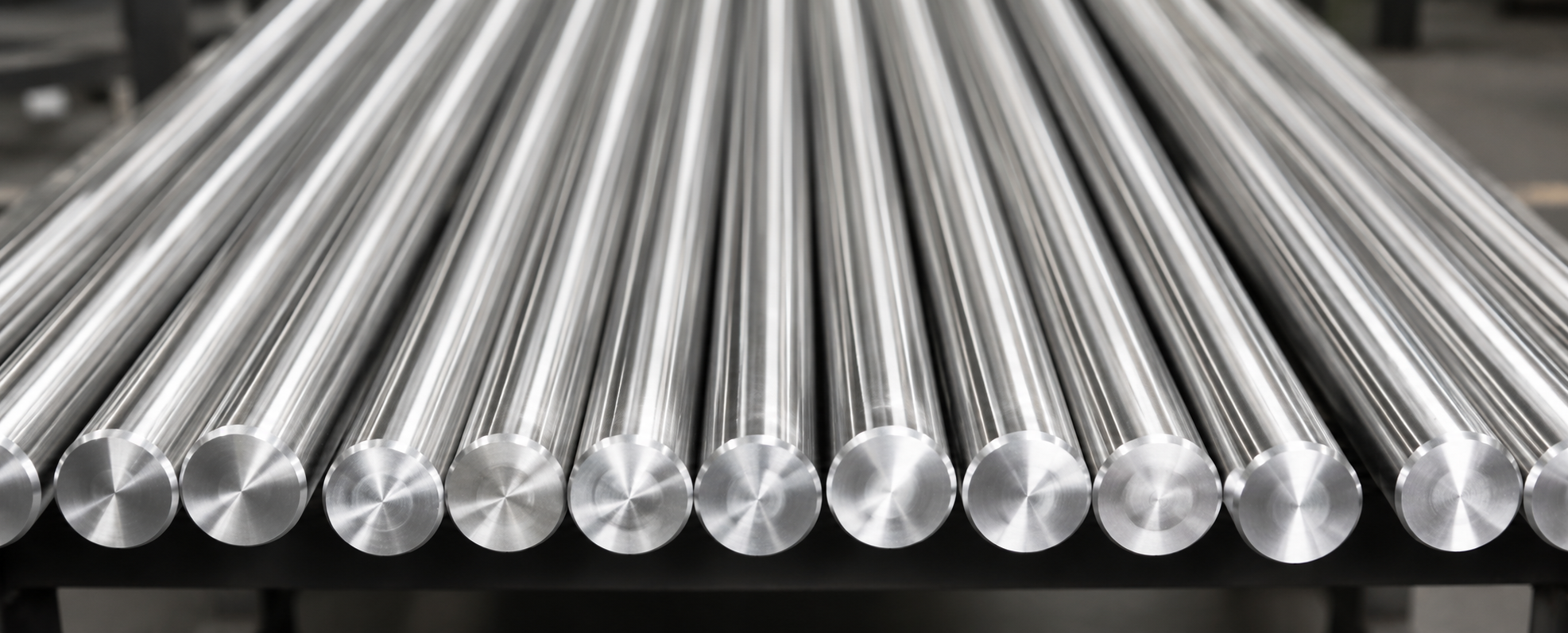
DD405 and DD419 serve as core structural materials for single-crystal turbine blades in modern engine manufacturing.

Order Nickel Alloy DD405 / DD419 at ASYNT.NET

ASYNT.NET supplies certified heat-resistant nickel superalloys for the aviation, aerospace, and power generation industries. To check DD405 and DD419 availability, available supply forms, applicable specifications, and delivery terms, contact our specialists via the website inquiry form or by phone.

Didn't find a suitable product?

For more information, please contact us or leave your contact details and we will call you back.