Nickel Alloy CM186LC
General Technical Characteristics
Material Type: Second-generation cast heat-resistant nickel-base superalloy for directional solidification (rhenium-bearing).
Grade: CM186LC.
Designation: CM186LC, CM 186 LC, Cannon-Muskegon 186 LC.
Standards / Specifications: AMS (aerospace and power generation turbomachinery industry specifications), Rolls-Royce / Allison / Solar Turbines specifications.
Alloy Base: Nickel (Ni).
Alloying System: Ni-Co-W-Cr-Al-Ta-Re-Hf-Ti-Mo.
Primary Manufacturing Method: Vacuum Induction Melting (VIM) followed by precision vacuum investment casting with directional solidification.
Strengthening Mechanism: Precipitation hardening (approx. 65–70% $\gamma’$-phase) and solid-solution strengthening with rhenium, tungsten, and tantalum.
Key Properties: Ultra-high creep-rupture strength, exceptional creep resistance at temperatures up to 1080–1100 °C, no solution heat treatment required.
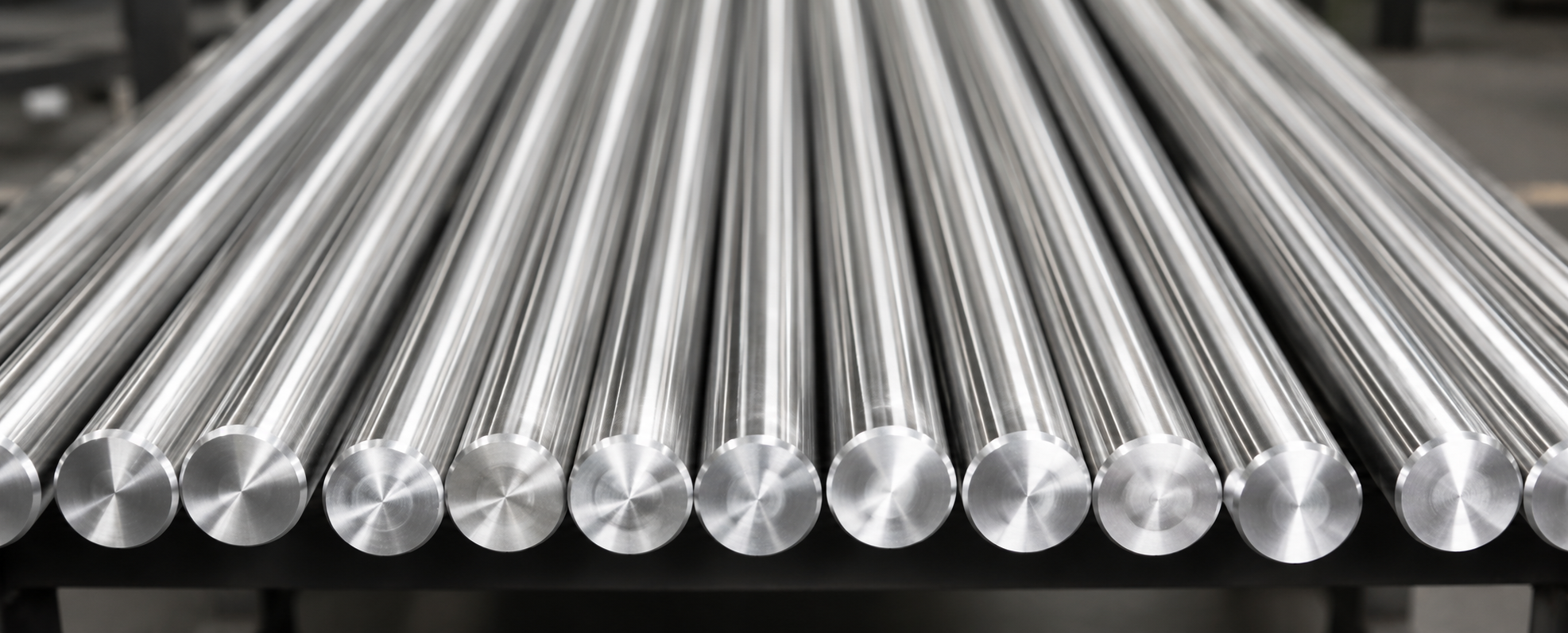
Supply Forms: Cast remelt ingots (master alloy), directionally solidified castings, and blanks.
Chemical Composition
| Element | Content, % | Element | Content, % |
| Nickel (Ni) | Balance | Rhenium (Re) | 2.80 – 3.20 |
| Cobalt (Co) | 9.00 – 9.60 | Hafnium (Hf) | 1.20 – 1.60 |
| Tungsten (W) | 8.10 – 8.70 | Titanium (Ti) | 0.60 – 0.90 |
| Chromium (Cr) | 5.80 – 6.30 | Molybdenum (Mo) | 0.40 – 0.60 |
| Aluminum (Al) | 5.50 – 5.90 | Carbon (C) | 0.06 – 0.08 |
| Tantalum (Ta) | 3.20 – 3.60 | Boron (B) | 0.012 – 0.018 |
| Zirconium (Zr) | 0.003 – 0.008 | Iron (Fe) / Silicon (Si) | max 0.15 / max 0.04 |
Mechanical and Performance Properties
ultra-high stress-rupture strength and creep resistance (the rhenium effect, which slows atomic diffusion processes);
capability for service in the as-cast plus double-aged condition (eliminating costly solution heat treatment and avoiding recrystallization risks);
high transverse ductility and resistance to longitudinal hot tearing during directional solidification;
enhanced resistance to thermal fatigue and thermal shock;
high microstructural stability without brittle topologically close-packed (TCP) phase precipitation;
superior adhesion and compatibility with aluminide, platinum-aluminide, and thermal barrier protective coatings.
Density: approx. 8.70 g/cm³.
Melting Range: approx. 1310 – 1380 °C.
Applications
cooled high-pressure turbine (HPT) rotor blades for modern aircraft gas turbine engines;
turbine nozzle guide vanes and stator assemblies featuring thin-walled convective and film-cooling channels;
high-temperature first-stage blades for high-efficiency industrial gas turbine units;
hot-section flowpath components for next-generation turboshaft and jet engines;
complex thin-walled shaped castings prone to recrystallization during conventional solution heat treatment.
Key Features of CM186LC
rhenium alloying (~3%), delivering creep-rupture strength comparable to first-generation single-crystal alloys (such as CMSX-2/3);
production cycle savings by omitting solution heat treatment (standard aging is sufficient);
elimination of recrystallization in thin sections and intricate aerodynamic airfoils;
balanced micro-alloying with C, B, Zr, and Hf, ensuring high columnar grain-boundary strength;
high property stability across extended operating service lives.