


How to glue metal to metal?
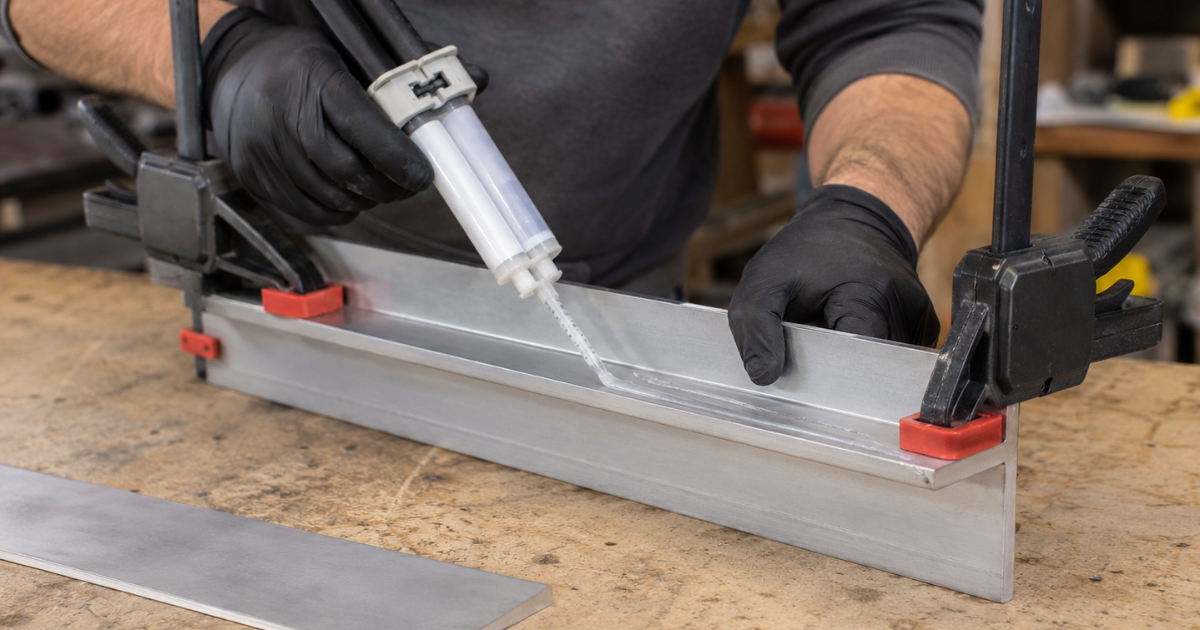
Metal parts cannot be bonded as easily as paper or wood. Their smooth structure, lack of pores, and the rapid formation of an oxide film when exposed to air make adhesion difficult. Adhesives do not penetrate the metal structure; instead, they rely entirely on surface adhesion. Therefore, choosing how to bond iron or non-ferrous alloys comes down to finding a compound with strong chemical adhesion.
Epoxy Adhesive
A classic choice for rigid metal structures. It consists of two components: epoxy resin and a hardener. When mixed, they trigger an exothermic reaction that releases heat and causes the compound to harden irreversibly. Epoxy adhesive works well for bonding parts with gaps between them. If the surfaces do not fit tightly together, the resin can also act as a structural filler.
Cold Welding Compound
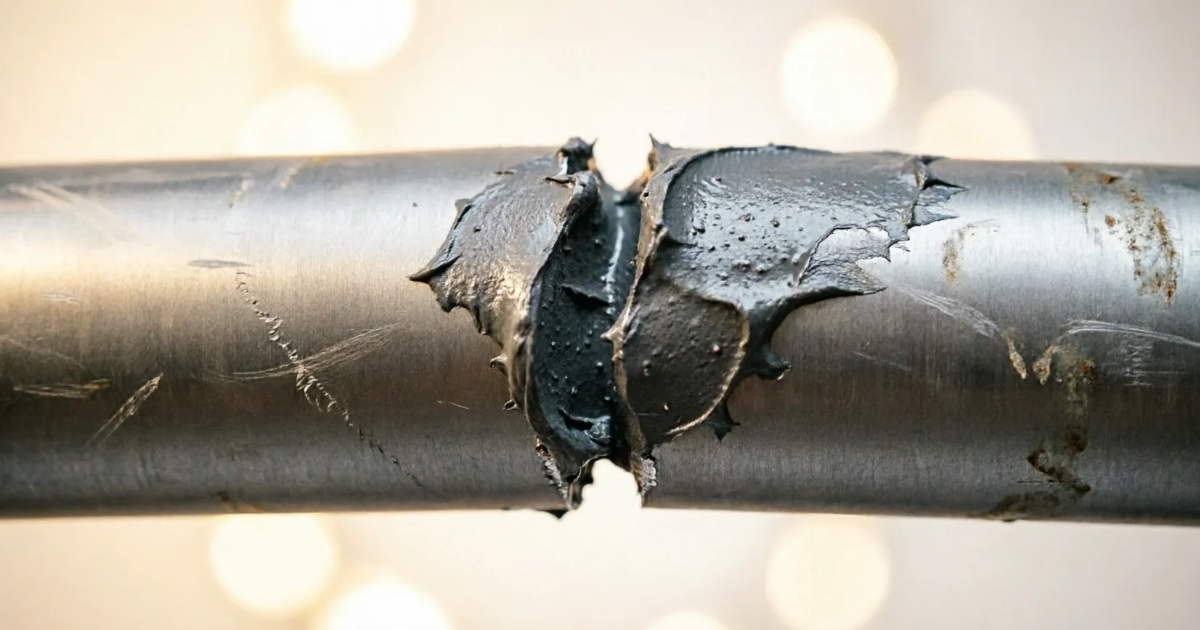
Technically, this is not welding but a thick epoxy putty containing metal powder, ceramic particles, and plasticisers added during manufacturing. It is available as a stick, with the hardener separated from the resin until use, or in two separate tubes.
Cold welding compounds are useful when you need to bond parts and seal a crack in an engine block, radiator, or low-pressure water pipe. They do not run off vertical metal surfaces, but they are not well suited to bonding flat sheets in an overlapping joint.
Cyanoacrylate and Polyurethane Adhesives
Cyanoacrylate adhesive is the familiar superglue. It polymerises when it comes into contact with traces of moisture that are normally present on surfaces.
Advantages: it sets within seconds and is ideal for small metal parts that fit closely together.
Disadvantages: the bond is brittle, much like glass. An impact can break the joint.
If you need to bond metal to metal and want the joint to withstand vibration and temperature fluctuations, polyurethane adhesives or MS polymers are often used. These products, frequently labelled as adhesive sealants, are commonly used in automotive manufacturing.
Anaerobic and Other Specialised Compounds
Anaerobic threadlockers work on a specific principle. They remain liquid when exposed to air but polymerise when oxygen is excluded and they come into contact with metal ions. These compounds are used to secure threaded fasteners and prevent bolts from loosening due to vibration. When looking for a way to bond metal at home without mess or lengthy drying times, double-sided tape is often overlooked. It can be used to hold metal panels on building façades.
How to Choose an Adhesive for Metal
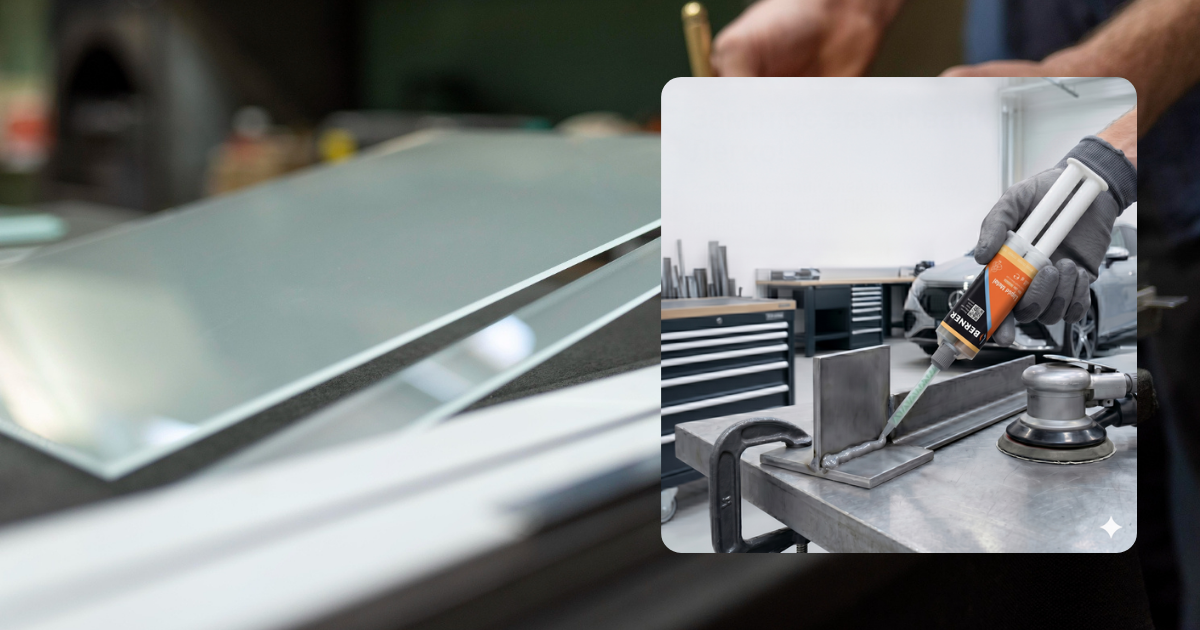
There is no universal adhesive for every application. A product that bonds metal well in a warm garage may lose its grip in freezing temperatures.
Choosing Based on Metal Type and Bonding Area
Ferrous metals such as steel and cast iron are generally the easiest to bond because they provide good adhesion after basic surface preparation. Copper and brass parts require compounds that do not promote copper corrosion. Aluminium and stainless steel are among the more difficult metals to bond. An oxide film forms on aluminium within minutes. Special two-part acrylic adhesives or epoxy compounds used with primers are suitable for these materials. For spot repairs on a small metal bracket, epoxy resin is often a good choice.
Resistance to Moisture, Temperature, and Loads
Standard epoxy resin begins to soften at around +80°C. If the metal part will be exposed to high temperatures, such as an exhaust system or engine components, look for heat-resistant silicate sealants or specialised titanium-based adhesives rated for temperatures up to +300°C. Moisture resistance is important for outdoor structures. Polyurethane compounds resist water and salts well, which is why they are used to repair boats and metal components of outdoor advertising structures.
Bonding Metal to Other Materials
A common construction task is bonding stone to metal, for example, attaching a steel plaque to a granite monument or fixing a metal profile to a brick wall. The main challenge is the difference in their coefficients of thermal expansion. Metal expands considerably in sunlight, while stone expands much less. A rigid adhesive joint may crack or fail. Suitable options for bonding metal in these situations include:
- Polyurethane adhesive sealants.
- Hybrid MS polymers, which accommodate movement between bonded components. Before applying the adhesive, the stone must be cleaned of dust and primed.
Both options remain flexible after curing, helping prevent the joint from cracking when temperatures fluctuate.
How to Bond Metal Parts Correctly
Even a high-performance structural adhesive will not hold a part securely if it is applied to a dirty surface. The strength of the bond depends heavily on proper preparation.
Surface Preparation and Degreasing
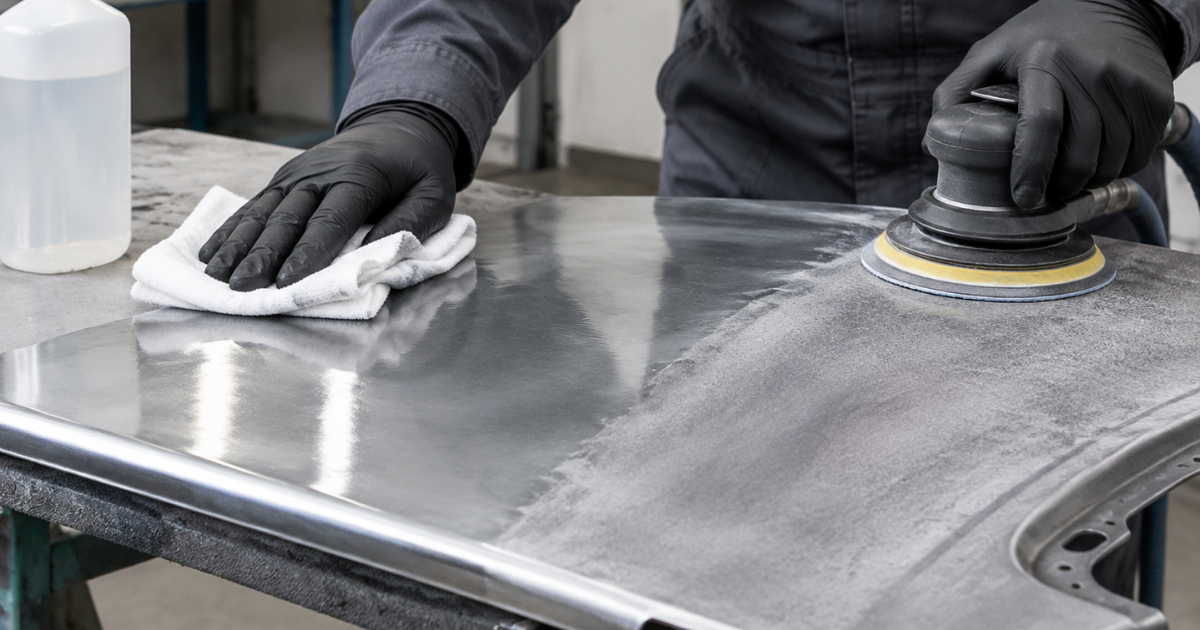
For a reliable bond, remove the oxide film and create a microscopically rough surface that allows the polymer to grip.
- Roughening the surface. Abrade the bonding area with P80–P120 sandpaper or a wire brush. The surface should become matte and slightly rough.
- Removing dust. Wipe the metal part with a clean, dry cloth.
- Degreasing. Use acetone, isopropyl alcohol, or brake cleaner. Avoid white spirit, petrol, or kerosene, as they may leave a thin oily residue that reduces adhesion.
Applying the Adhesive and Joining the Parts
Before bonding the parts, mix two-part adhesives strictly according to the manufacturer’s instructions. Adding extra hardener to make the adhesive cure faster can result in a brittle bond. Apply the compound evenly. If you use cyanoacrylate adhesive, a few drops on one of the metal surfaces are usually sufficient. When working with epoxy resin, the layer can be thicker, typically 0.5–1 mm.
Clamping and Full Curing Time
How can you bond metal to metal without having to hold the parts together by hand for an hour? Use clamps, a vice, or masking tape. Most adhesives have two distinct time frames:
- Setting time: from 5 minutes to a couple of hours. The parts become fixed in position, but the joint must not yet be subjected to loads.
- Full curing time: usually 24 hours. The adhesive’s molecular structure continues to develop during this period.
Following these time intervals is one of the key factors directly affecting the final strength of the bond.
How to Make a Metal Adhesive Joint Strong
Adhesive joints perform well under shear loads but are much less resistant to tensile or peel forces. If you bond a plate edge-to-edge and then try to bend it away, the joint may break.
Strength Factors and Common Mistakes
To bond metal to metal reliably, avoid these common mistakes:
- Smooth surfaces. Skipping sanding can cause the part to detach together with the hardened adhesive.
- Ignoring the mixture’s working time. With fast-setting epoxy, such as a five-minute formula, the working time in the container may be only 2–3 minutes. If you apply it after four minutes, when it has already started to thicken, a proper bond with the metal may not form.
- Incorrect temperature conditions. Polymerisation requires suitable warmth. If the garage temperature is +5°C, epoxy may remain tacky for days. If permitted by the adhesive manufacturer’s instructions, warm the metal part with a heat gun to at least +20°C.
When Is Welding or Mechanical Fastening Better Than Adhesive?
Do not rely on adhesive to join critical load-bearing structures. If a metal part coming loose could cause injury or an accident, such as a towing hook, a shelf bracket supporting a heavy machine, or a vehicle frame component, do not rely on a tube of adhesive. Adhesives are suitable for decorative work, sealing, securing guide rails, mounting signs, or repairing metal housings that are not subjected to dynamic loads. In other cases, use welding, rivets, or bolts.
Didn't find a suitable product?
For more information, please contact us or leave your contact details and we will call you back.