• Mon - Sat : 9:00 - 18:00
  • Sun : day off

Nickel Alloy MAR-M002

Nickel Alloy MAR-M002

Quantity

The goods can be picked up by self-delivery at metal depots in Kyiv. Also, in agreement with the customer, rolled metal products can be delivered to any region of Ukraine

  • Characteristics

Nickel Alloy MAR-M002

MAR-M002 (MAR-M 002) is a cast precipitation-hardenable nickel-base superalloy developed by Martin Marietta for manufacturing heavily loaded hot-section components in aircraft and industrial gas turbine engines operating under extreme temperatures and mechanical stresses.
Derived from MAR-M246 through the addition of hafnium (Hf — approx. 1.5%) and adjustments to refractory and carbide-forming elements, hafnium alloying dramatically improves grain-boundary ductility, enhances creep resistance at intermediate and high temperatures, and prevents hot tearing during the casting of complex hollow parts. Its primary strengthening mechanism is the precipitation of a high volume fraction of the intermetallic $\gamma’$-phase ($Ni_3(Al, Ti, Ta)$), complemented by solid-solution strengthening from tungsten and tantalum.
MAR-M002 is primarily used for vacuum precision investment casting of internally cooled turbine rotor blades and nozzle guide vanes, utilizing both equiaxed and directional solidification processes.

General Technical Characteristics

  • Material Type: Hafnium-modified cast heat-resistant nickel-base superalloy.

  • Grade: MAR-M002.

  • Designation: MAR-M002, MAR-M 002, MSRR 7164.

  • Standards / Specifications: Aerospace engine industry specifications (Rolls-Royce MSRR 7164, AMS, etc.).

  • Alloy Base: Nickel (Ni).

  • Alloying System: Ni-W-Co-Cr-Al-Ta-Hf-Ti.

  • Primary Manufacturing Method: Vacuum Induction Melting (VIM) followed by precision vacuum investment casting (including directional solidification).

  • Strengthening Mechanism: Precipitation hardening (approx. 60% $\gamma’$-phase) and solid-solution strengthening with tungsten and tantalum.

  • Key Properties: Ultra-high creep-rupture strength, enhanced grain-boundary ductility, thermal fatigue resistance, and hot-tearing resistance during casting.

  • Supply Forms: Cast remelt ingots (master alloy), shaped castings, and blanks for machining.

Chemical Composition

Typical chemical composition of MAR-M002 according to industry specifications (MSRR 7164), wt. %:
ElementContent, %ElementContent, %
Nickel (Ni)BalanceTantalum (Ta)2.25 – 2.75
Tungsten (W)9.50 – 10.50Hafnium (Hf)1.25 – 1.75
Cobalt (Co)9.50 – 10.50Titanium (Ti)1.25 – 1.75
Chromium (Cr)8.50 – 9.50Carbon (C)0.13 – 0.17
Aluminum (Al)5.25 – 5.75Zirconium (Zr)0.03 – 0.08
Boron (B)0.010 – 0.020Iron (Fe)max 0.50
Manganese (Mn)max 0.10Silicon (Si)max 0.10
The values provided are for reference purposes. Actual chemical composition must be verified against the applicable standard revision and the specific heat/melt certificate.

Mechanical and Performance Properties

MAR-M002 retains exceptional stress-rupture strength and creep resistance at operating temperatures up to 1000–1040 °C (1830–1900 °F), outperforming the base MAR-M246 alloy in ductility and hot-tearing resistance in thin sections.
Key Performance Characteristics:
  • ultra-high stress-rupture strength and creep resistance under extreme heat;

  • substantially enhanced grain-boundary ductility within the 700–900 °C temperature range;

  • high resistance to thermal fatigue during rapid engine throttle transients;

  • suppression of casting hot tears during the solidification of complex shaped castings;

  • compatibility with advanced aluminide and thermal barrier protective coatings (used to protect against oxidation at peak operating temperatures).

Physical Characteristics:
  • Density: approx. 8.54 g/cm³.

  • Melting Range: approx. 1300 – 1365 °C.

Specific mechanical values (tensile strength, yield strength, rupture life) depend on the casting process (equiaxed vs. directional solidification) and heat treatment regimes, and are therefore governed by the documentation for a specific batch.

Applications

Nickel alloy MAR-M002 is used in aerospace, space, and power generation turbomachinery to produce the most thermally and mechanically stressed components:
  • high-pressure and intermediate-pressure turbine rotor blades for aircraft gas turbine engines;

  • nozzle guide vanes and stator assemblies with complex internal cooling passages;

  • integrally cast turbine wheels (blisks) for auxiliary power units (APUs) and small gas turbine engines;

  • hot-section flowpath components for jet and turboshaft engines;

  • heavily loaded elements for specialized stationary gas turbine units.

Key Features of MAR-M002

The defining feature of MAR-M002 is the targeted modification of the high-strength Ni-W-Co-Cr-Al-Ta system with hafnium (1.5%), accompanied by the removal of molybdenum. Hafnium refines and spheroidizes grain-boundary carbides, eliminating brittle platelet precipitates and multiplying the transverse ductility of the material.
Main Advantages of the Material:
  • optimal combination of creep-rupture strength and ductility through hafnium and tantalum alloying;

  • superior castability when manufacturing thin-walled hollow blades using ceramic cores;

  • enhanced microstructural stability without brittle topologically close-packed (TCP) phase precipitation;

  • suitability for both equiaxed and directionally solidified vacuum casting;

  • proven reliability over extended flight cycles and high centrifugal loads.
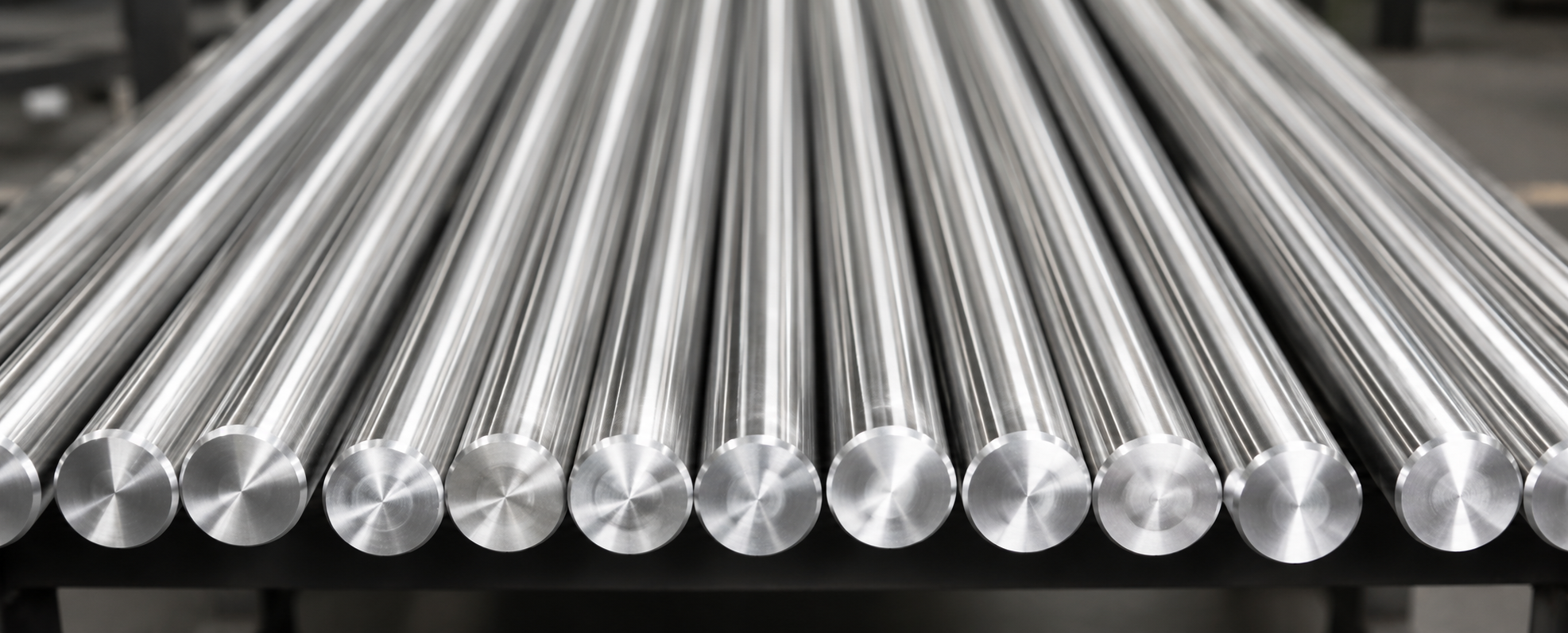
MAR-M002 remains a key structural material in modern aerospace turbine manufacturing.

Order Nickel Alloy MAR-M002 at ASYNT.NET

ASYNT.NET supplies certified heat-resistant nickel superalloys for the aviation, aerospace, and power generation industries. To check MAR-M002 availability, available supply forms, applicable specifications, and delivery terms, contact our specialists via the website inquiry form or by phone.

Didn't find a suitable product?

For more information, please contact us or leave your contact details and we will call you back.