


How to remove rust from metal before painting

Metal corrosion is the result of iron reacting with oxygen and water. Even ordinary air humidity above 60% can trigger the oxidation process. Iron oxide forms on the metal surface. The first step is to assess the extent of the damage to determine how to remove rust. If you are dealing with a light reddish coating, you can wipe it off with a stiff sponge.
When rust flakes off in layers and the metal underneath has become as thin as foil, chemical treatment is pointless. The part loses its structural strength. If you are looking for a way to remove rust from metal in this situation, the solution may involve an angle grinder, welding, and replacing the damaged section.
Preparation: What to Do Before Removing Corrosion
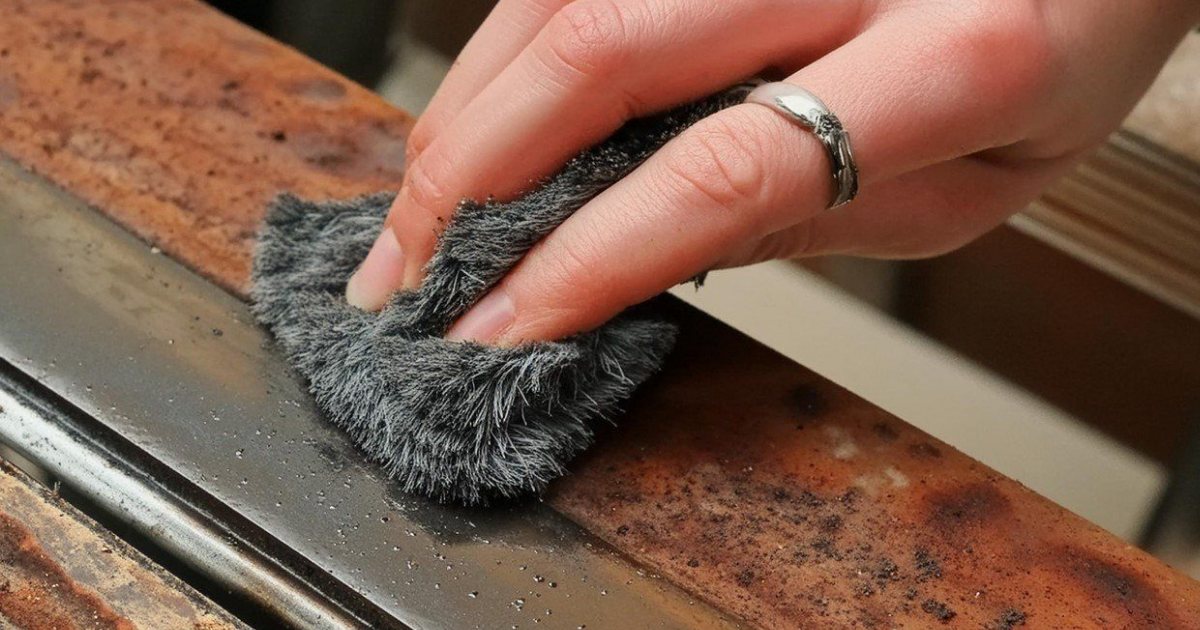
One of the most common mistakes beginners make is pouring acid over a dirty, oil-covered part and expecting a miracle. However, chemical products cannot penetrate a layer of heavy fuel oil or grease. Here is what you need to do:
- Remove loose dirt from the corroded surface. Use a wire brush to scrape off layers of soil, old paint, and flaking rust.
- Degrease the metal surface. Wipe it with an anti-silicone cleaner, petroleum solvent, or brake cleaner. Standard 646 thinner will also work, but it evaporates quickly.
- Dry the metal. If you are using a mechanical cleaning method, the part must be completely dry; otherwise, the abrasive will quickly become clogged with dirt.
Only after completing these steps should you choose how to remove rust from metal.
How to Remove Rust from Metal
The choice of method depends on the thickness of the part, the tools available to you, and whether the part can be removed and soaked in a solution.
Mechanical Cleaning
This is the fastest method for flat, easily accessible metal surfaces when deciding how to clean rust off metal. It is highly effective but requires care to avoid removing too much material.
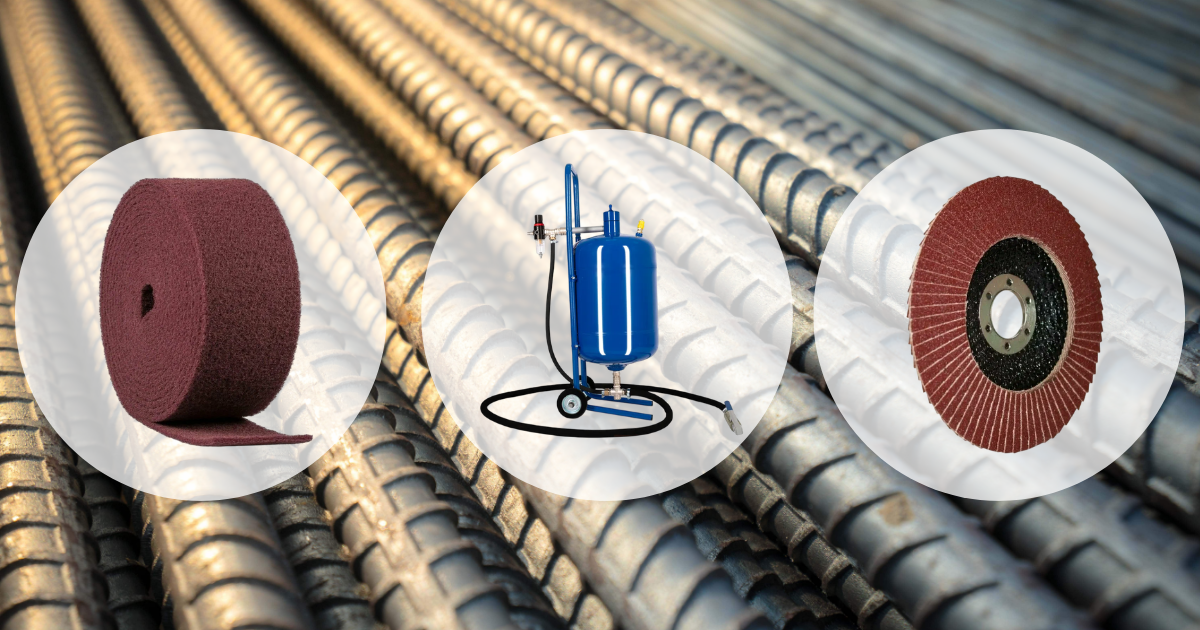
- Coral discs (fiber abrasives). An ideal choice for car bodies and flat metal stock, allowing you to remove rust safely. A coral disc fitted to an angle grinder or drill effectively removes rust deposits and old paint while causing minimal damage to sound metal.
- Wire brush attachments. These are available in twisted (stiff) and straight (softer) versions. They are good at removing loose rust from pits, but keep in mind that they may not eliminate corrosion completely. They often polish the rusted surface, making it look shiny while concealing the underlying problem.
- Sandblasting. One of the most effective methods when you need to remove rust from metal thoroughly. It removes oxides even from the smallest pores.
Warning: When working with abrasives, wear a respirator (at least FFP2-rated) and fully enclosed safety goggles.
Chemical Products and Rust Converters
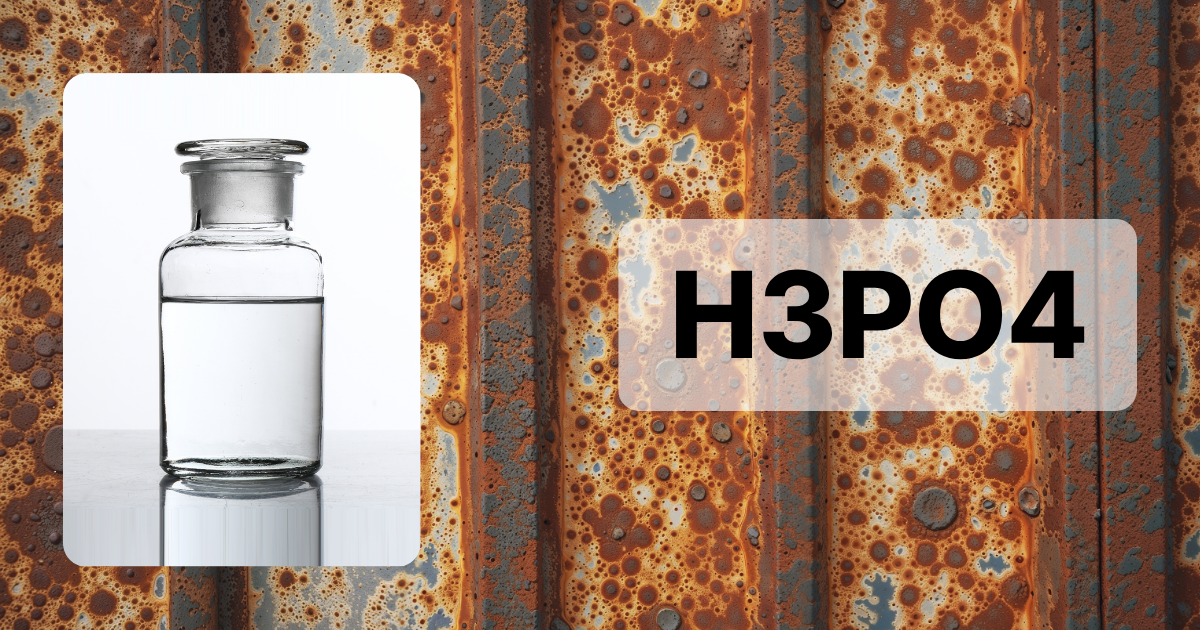
If a metal part has a complex shape or the corrosion has penetrated deeply, mechanical cleaning alone may not be enough. This is where acids come in. Most commercially available rust converters are based on phosphoric acid. It reacts with iron oxide and converts it into iron phosphate. Here is how to use these products:
- Apply the product to the cleaned metal surface using a brush or sprayer.
- Leave it on for the time specified by the manufacturer, usually between 15 minutes and a couple of hours.
- An essential step is to neutralize the reaction. If the label does not state that rinsing is unnecessary, remove any remaining acid. A baking soda solution is often suitable for rinsing, after which the metal should be dried immediately.
Zinc-rich rust converters cost more but can provide better corrosion protection. They not only react with oxides but also leave a thin protective layer of zinc on the surface.
How to Remove Rust at Home: Vinegar, Baking Soda, and Citric Acid
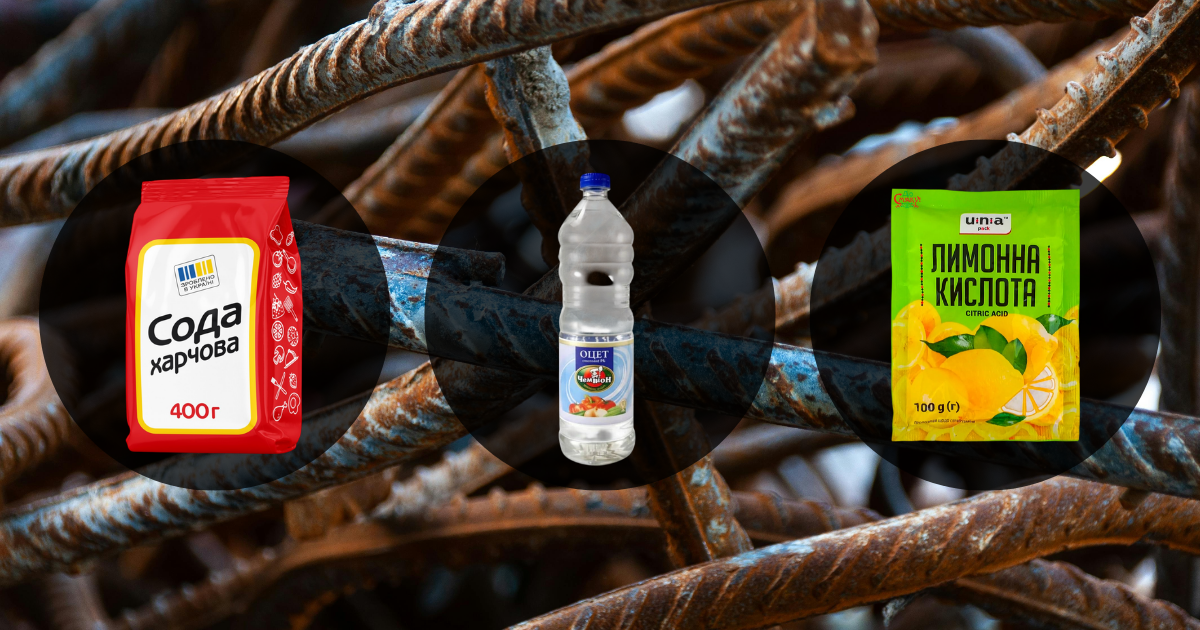
If you do not have specialized chemicals available and need to clean corrosion off a small tool, common household substances can help.
- Citric acid. One of the most popular ways to remove rust from metal at home. Place the rusty part in a solution for 2–4 hours. Remove it periodically and scrub it with a stiff brush.
- Vinegar. Another proven option for cleaning rust is ordinary 9% table vinegar (acetic acid). The part will need to soak for 12–24 hours.
- Baking soda. Suitable for light rust deposits on flat surfaces. Mix baking soda with a small amount of water until it forms a thick paste. Apply it to the metal, wait 15–20 minutes, and scrub firmly with a piece of crumpled aluminum foil or a stiff sponge.
All three household methods have one thing in common: after treatment, the metal must be rinsed immediately, dried, and protected with oil or primer.
How to Remove Rust from Different Metal Surfaces
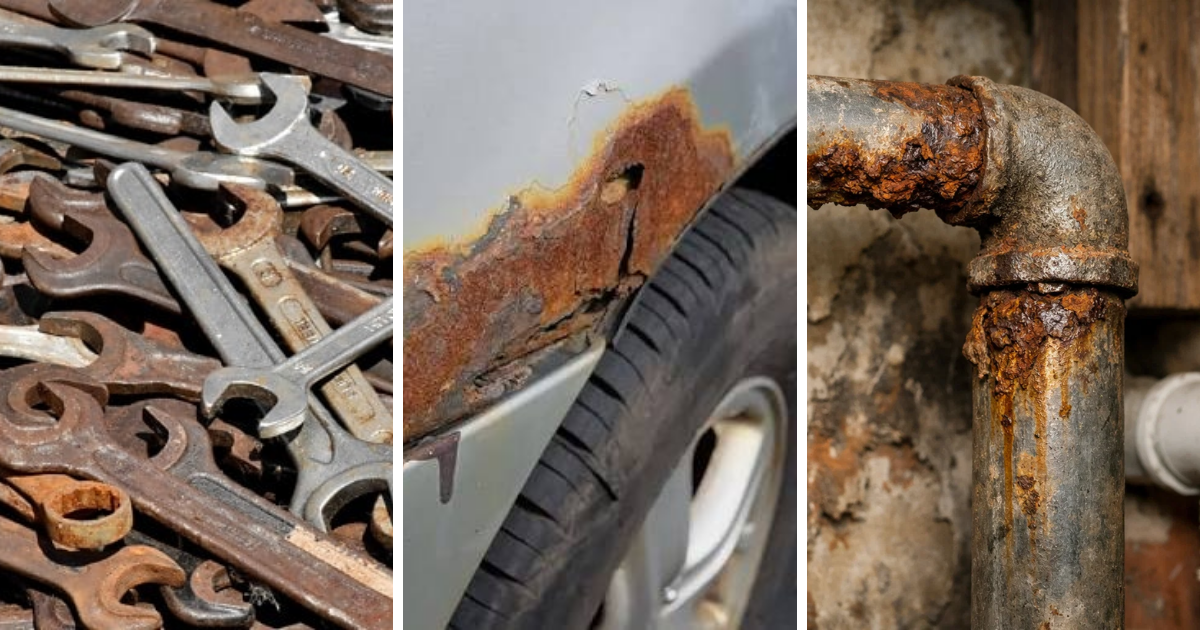
The approach to removing corrosion from a steel I-beam differs significantly from the method used on a car fender.
Tools, Pipes, and Metal Structures
These items generally do not require particularly delicate treatment:
- Fence posts, rebar, and steel channels. If you are unsure how to remove rust, use an angle grinder fitted with a flap disc. If the structure is already outdoors, treat it with a rust converter after mechanical cleaning, rinse the product according to the instructions, dry the metal, and apply an alkyd anti-corrosion primer.
- Wrenches, pliers, and drill bits. Soaking them overnight in a citric acid solution is an effective way to remove rust and corrosion. In the morning, rinse the tools with water and baking soda, dry them with a heat gun, and apply a generous amount of penetrating lubricant.
In both cases, the final step is the same: the metal must be covered with a protective coating.
Automotive Parts and Thin Body Metal
Automotive steel is typically 0.6–0.8 mm thick. An aggressive grinder can cut straight through it or overheat the panel, causing it to warp. Here is how to remove rust from a car’s metal body:
- Use coral abrasive discs to remove rust. They strip away paint and corrosion down to clean metal without significantly reducing its thickness.
- Treat any remaining dark spots or pits with a gel rust converter.
- Make sure to remove any acid residue, because washing away the rust is only half the job. In rust-affected cavities, use cavity wax, corrosion-preventive grease, or sprayable ML anti-corrosion compounds.
Protection: How to Prevent Metal from Rusting Again
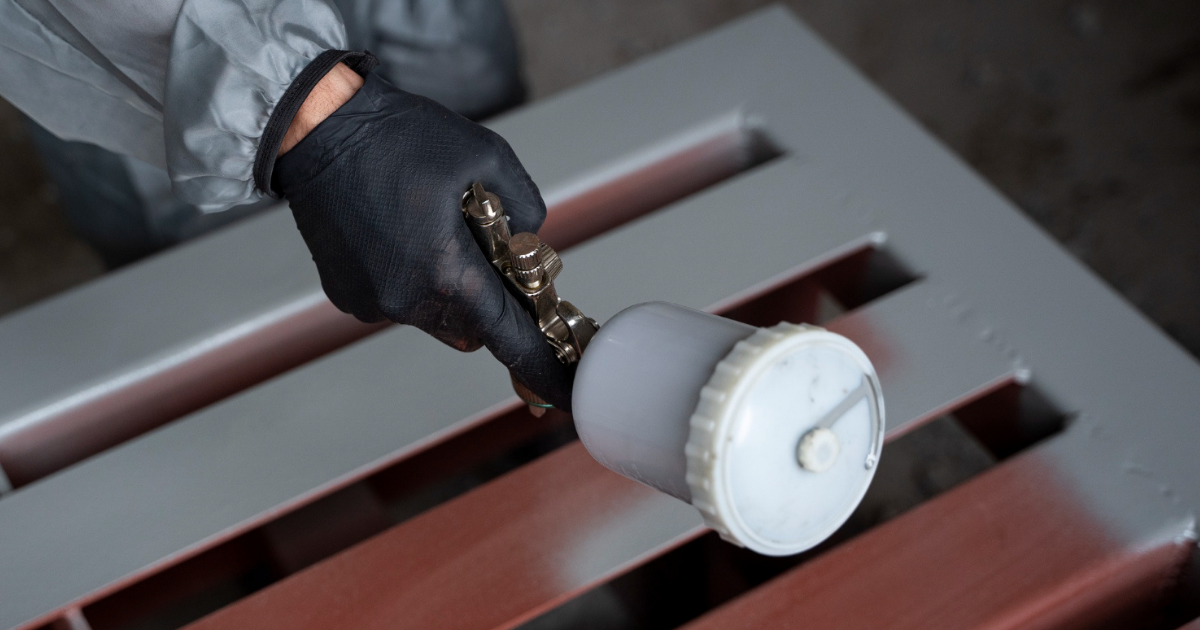
Cleaned iron is highly reactive. When exposed to air, it can begin forming an initial oxide film within just 20–30 minutes. The metal must be protected immediately.
- Priming. For reliable protection, use an epoxy primer, which creates a water-resistant film. An alternative is an acid-etching primer (wash primer), which chemically bonds to the metal surface.
- Painting. Alkyd or polyurethane enamels are suitable options. Products marketed as “3-in-1” (primer and paint designed for application over rust) are generally best suited to structures such as fences.
- Cold galvanizing. Products containing up to 95% zinc powder are applied like paint but provide protection through the principle of cathodic protection.
Common Mistakes When Removing Rust
Even experienced professionals sometimes make the same mistakes. Here are the most critical ones to be aware of in advance.
- Painting directly over loose rust. No paint marketed as “direct-to-rust” will last if flakes of corrosion are peeling away underneath. The surface must be cleaned down to a firm layer.
- Failing to rinse off a rust converter properly. If phosphoric acid is simply wiped off with a cloth and then painted over, the residue may cause the paint to blister.
- Using sandpaper on soft metals or precision mechanisms. If you try to remove corrosion from a bearing seat with coarse sandpaper, you may alter the tolerances and render the part unusable.
- Forgetting to protect the metal. Leaving a part that has been cleaned with citric acid on the workbench overnight means you may have to start the job all over again the next day.
Each of these mistakes can undo hours of work and force you to repeat the entire process.
Didn't find a suitable product?
For more information, please contact us or leave your contact details and we will call you back.