


Which Profile Tube to Choose for a Fence?
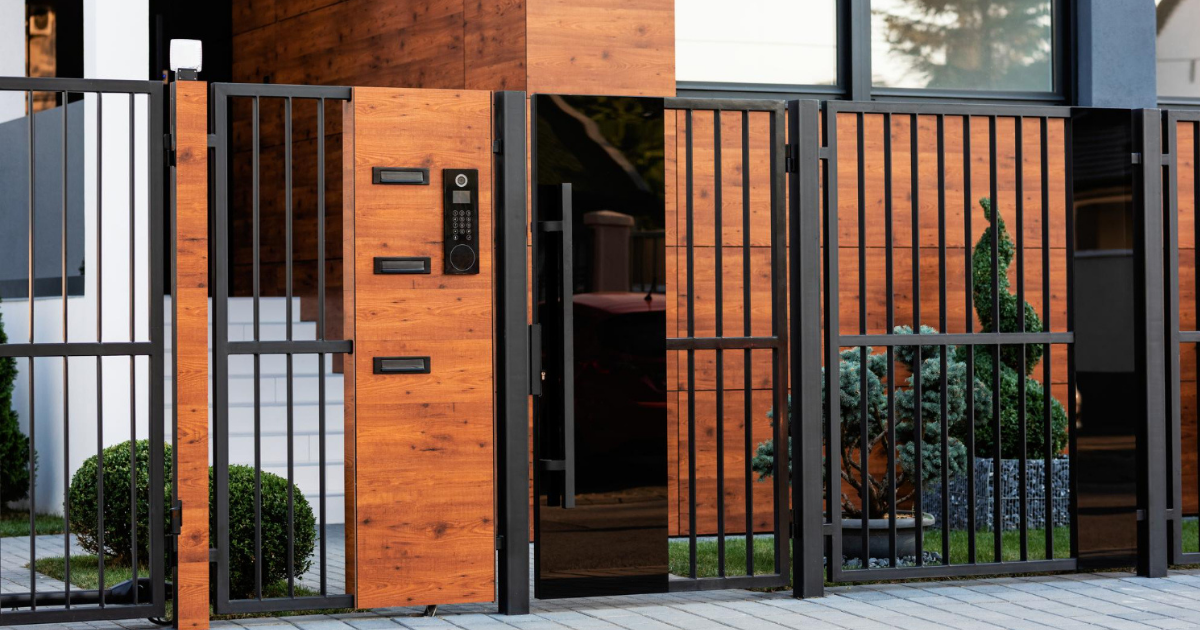
When building fences and enclosures, traditional round pipes are still used if there are no strict requirements regarding the type of profile to be used. A circular cross-section has an important engineering advantage: it offers equal resistance to bending in all directions. However, profile pipes are replacing round pipes due to their ease of use in manufacturing and construction.
Before calculating the required length of metal products and deciding which pipe to choose for a fence, it is necessary to consider two external loads that will act on the structure. These determine the dimensions of the support posts, wall thickness, and final profile pipe size for the fence.
Wind Load
If a fence section is covered with solid material, it acts like a sail. Wind pressure in Ukraine is regulated by the DBN V.1.2-2:2006 building standards. Depending on the wind region (for example, in certain areas of the southern coastal regions), the characteristic wind pressure can reach 500 Pa.
In practice, this means that a standard solid fence section with an area of 5 m² may experience a horizontal force of approximately 2.5 kN (equivalent to 250 kgf) during storm conditions, taking aerodynamic coefficients into account. This load is transferred through the horizontal rails to the pipes, creating a bending force.
Soil Type and Frost Heave
Frost heave is a common problem in water-saturated clay and loam soils. In winter, water in the ground freezes, forming ice layers (lenses) that expand in volume and push the foundation structure upward.
The depth at which a fence post is installed and the method used to secure it depend not only on the standard frost penetration depth but also on the chosen foundation design. In frost-susceptible soils, measures are often taken to reduce the bond between concrete and the surrounding ground, or crushed stone is used for backfilling. Pipes for such applications should be purchased with extra length to account for the underground section.
What Size Profile Pipe Is Needed for a Fence Frame?
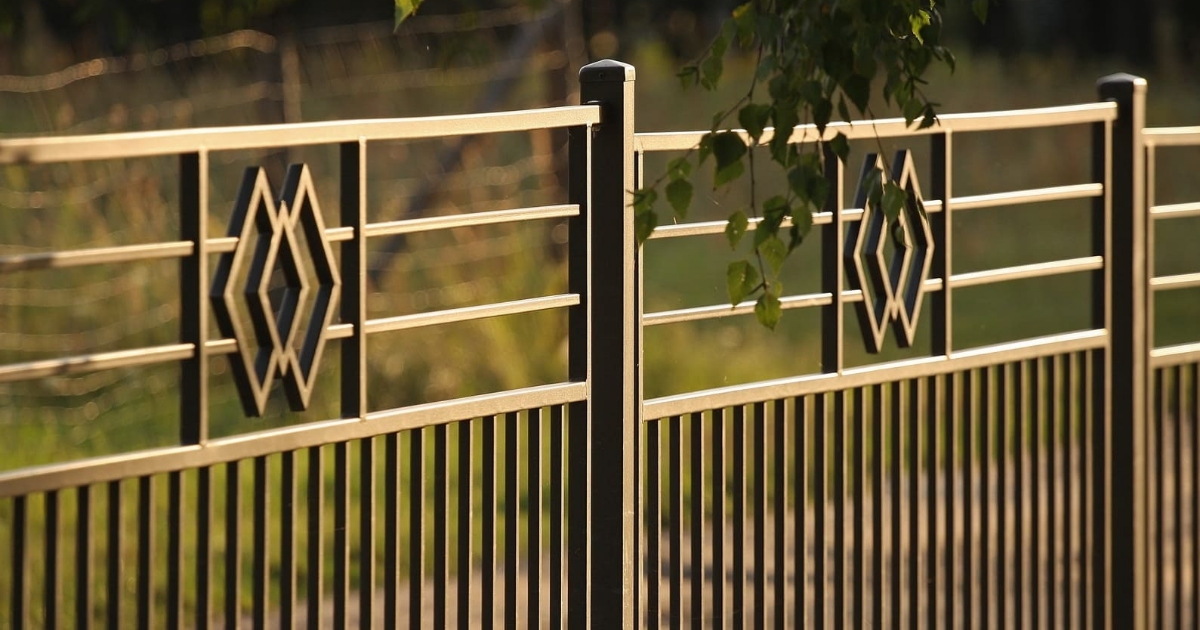
When determining which pipe is suitable for a fence, designers and installers rely on calculated loads.
Support Posts and Their Characteristics
The choice of pipe for fence posts depends on the height of the structure and the type of infill. A square profile is preferable to a rectangular one because it is symmetrical about its principal axes.
When deciding which profile pipe to use for a fence, keep in mind that 40×40 mm or 50×50 mm sections are often used for lightweight fences installed in stable soils. A common practical recommendation for solid fences approximately 2 metres high is a 60×60 mm pipe. If the height exceeds 2.5 metres or the fence is installed in an area with strong winds, 80×80 mm pipes may be required.
What wall thickness should a profile pipe have for a fence? There is no universal minimum value; the choice must be based on calculations. In practice, pipes with a 2 mm wall thickness are commonly used. However, choosing 3 mm steel provides a greater strength reserve and can improve corrosion resistance. The corrosion rate depends on humidity, soil conditions, and the state of the protective coating.
Horizontal Rails
A square cross-section is unnecessary for horizontal rails, so rectangular profiles are generally used, most commonly 40×20 mm. Their orientation is an important detail. For a rectangular 40×20 mm pipe, the section modulus under bending differs by approximately 2.5 times depending on the axis. To maximise the rail’s stiffness against horizontal wind pressure, the longer side of the section (40 mm) should be oriented along the direction of the force (perpendicular to the plane of the fence).
Pipes for Gates and Pedestrian Gates
A profile-pipe fence structure experiences dynamic loads and is subjected to torsion and bending under the weight of the gate leaves. Pipe specifications depend on the weight of the infill, the width of the entrance, and the number of hinges. In practice, 80×80×3 mm or 100×100×4 mm profiles are often chosen for the support posts of gate assemblies. A 60×40 mm profile is used for the outer frame of the gate leaf itself, while 40×20 mm profiles are used for internal stiffening ribs.
Which Pipes Should You Choose for Different Types of Fences?
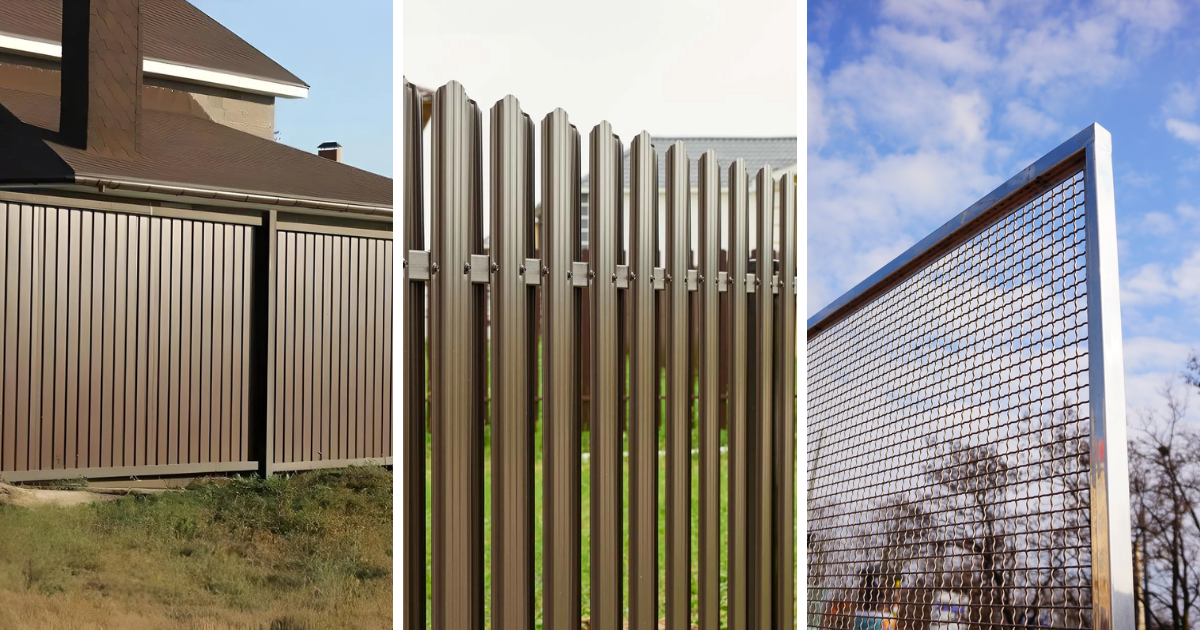
To determine which pipes are needed for a fence, remember that the infill material significantly affects its aerodynamic properties.
Corrugated Metal Fence
A solid metal sheet has a high aerodynamic drag coefficient. When determining which pipes are needed for a corrugated metal fence, additional reinforcement should be considered:
- The distance between support posts is usually reduced to 2–2.5 metres.
- If the sheet height exceeds 1.8 m, installing three horizontal rails instead of two is recommended in high-wind areas. This reduces the bending moment acting on the sheet itself and helps prevent deformation.
Following these recommendations helps the frame withstand calculated wind loads without deforming the posts and rails throughout its service life.
Metal Picket and Wooden Fences
A picket fence, especially one installed in a single row with gaps, allows some air to pass through. This reduces wind pressure compared with a solid sheet. Which profile pipe is needed for this type of fence? Practical experience shows that 60×60 mm support posts are usually sufficient when installed at the standard spacing of 2.5 metres.
Lightweight Structures: Chain-Link Mesh and 3D Fence Panels
Mesh fencing has significantly lower wind resistance than solid materials, although it is not entirely unaffected by wind, as airflow still interacts with the wires. The main load comes from the tension of the mesh between the support posts. For this type of fence, 40×40 mm or 60×40 mm profile pipes can be considered. Tensioned wire or reinforcing steel bars are often used instead of rigid tubular rails.
What to Consider When Buying and Installing Pipes
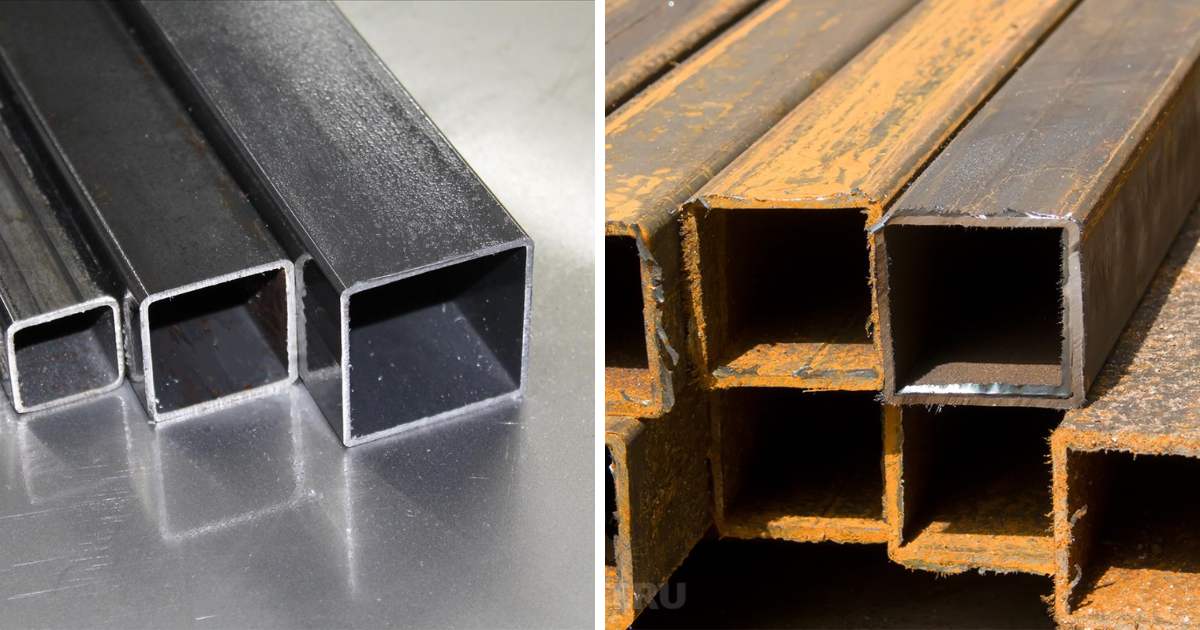
Choosing the right pipe profile for a fence is only the first step. The durability of the frame also depends on corrosion protection and installation quality.
Metal Quality and Corrosion Protection
Metal suppliers offer both untreated carbon steel and galvanised metal products. A zinc coating significantly slows corrosion, but galvanised material is more expensive. The price premium depends on the manufacturer, coating thickness, and market conditions. Welding galvanised pipes presents a challenge because zinc oxidises and evaporates in the welding zone. Welders need adequate ventilation or respiratory protective equipment.
The weld seams themselves remain unprotected and must be cleaned and coated with special zinc-rich compounds. Most private builders choose ordinary carbon steel, such as grade St3, when selecting profile pipes for a fence. Its durability depends on proper surface preparation before painting.
Common Mistakes When Choosing and Installing Pipes
Following the recommended parameters helps the frame withstand calculated wind loads without deforming the posts and rails throughout its service life.
- Leaving the ends of support posts open. If rainwater regularly enters the pipes, internal corrosion accelerates. Plastic caps or welded steel plates help prevent moisture and debris from getting inside.
- Ignoring soil properties. Pouring concrete directly into an uneven hole around a pipe in frost-susceptible loam can create an anchor that the freezing soil grips. To reduce frost-heave forces, the holes are often lined with roofing-felt sleeves that act as formwork.
- Incorrectly calculating wall thickness for arc welding. A thin wall (1.5 mm) can easily burn through during manual metal arc welding (MMA) without sufficient experience. For thin-walled metal products, semi-automatic welding in a shielding gas environment is preferable.
Taking these factors into account during the planning stage helps prevent rework and additional costs during the service life of the fence.
Didn't find a suitable product?
For more information, please contact us or leave your contact details and we will call you back.